Concrete Driveway Repair vs Replacement in Red Deer — When to Fix, When to Replace
Most Red Deer homeowners call us when the damage is already beyond repair. A $400 crack fill in October becomes a $12,000 driveway replacement by April — one Alberta winter is all it takes. This guide gives you the exact signs that determine repair vs replacement, what each costs in Red Deer in 2026, and why timing this decision correctly in Central Alberta matters more than almost anywhere else in Canada.
Need a repair now? See our full concrete repair, leveling and lifting services page for a free on-site assessment.
The Real Cost of Getting This Decision Wrong
Red Deer averages 40+ freeze-thaw cycles per winter. Every crack, spall, or exposed aggregate in your driveway surface is a water entry point. Water infiltrates the crack, freezes, expands by 9%, and widens the crack. By spring it is 3x the size it was in October. Do this for two winters and a repairable surface becomes a structural failure requiring full removal, new sub-base, formwork, and pour — the full $8,000–$18,000 replacement job. Early repair is almost always the better financial decision. The problem is knowing which damage qualifies.
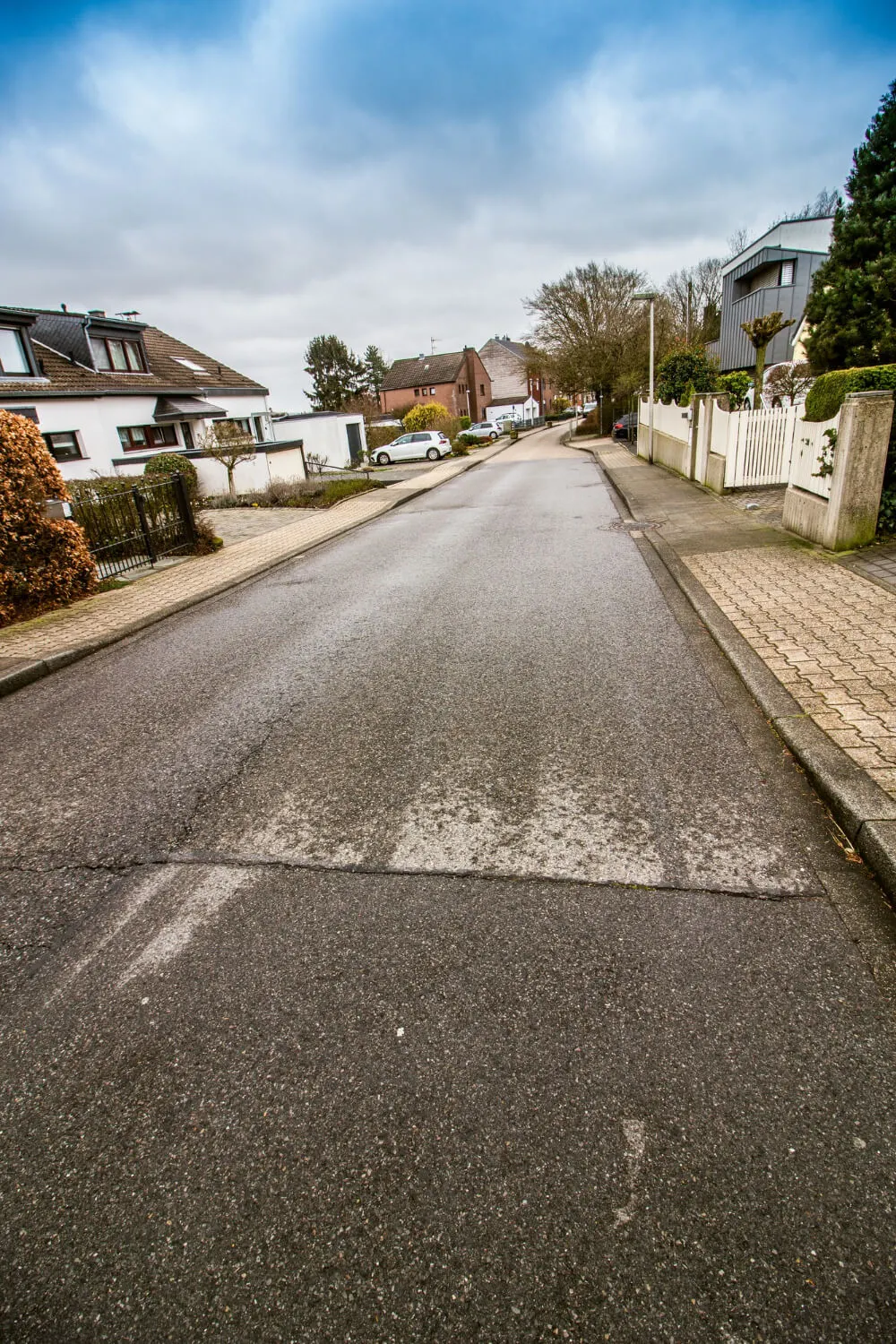
5 Signs Your Concrete Driveway Can Be Repaired
1. Hairline or Isolated Cracks Under 6mm Wide
Hairline surface cracks and isolated cracks under 6mm that have not penetrated through the full slab depth are repairable. Fill with a flexible polyurethane sealant, allow to cure above 10°C, then apply a penetrating concrete sealer over the entire surface. Cost: $200–$600 depending on total linear footage. This repair holds 5–10 years if sub-base is stable. If the same crack reopens within one season, the substrate is moving — that changes the diagnosis to replacement.
2. Surface Spalling or Scaling Under 20% of Total Area
Surface spalling — the flaking or popping of the top layer of concrete — is caused by freeze-thaw moisture infiltration, de-icer chemical damage from rock salt and calcium chloride, or concrete finished too early while bleed water was still rising. If spalling covers less than 20% of your driveway and has not penetrated deeper than 6–10mm, a concrete overlay or resurfacing product can restore the surface. Cost: $3–$6 per square foot for a professional overlay. Beyond 20% coverage or deeper delamination, the overlay will not bond reliably and replacement is correct.
3. A Single Settled or Sunken Panel (Mudjacking Candidate)
If one section has settled 1–3 inches below adjacent panels but the concrete is structurally sound with no through-cracking, mudjacking (slab lifting or pressure grouting) is cost-effective. A cement slurry is pumped under the settled slab through drilled holes, filling the void and lifting the panel back to grade. Cost: $400–$900 per panel. Not appropriate if the slab cracked through during settlement — that requires removal and replacement.
4. Edge Chipping Without Structural Cracking
Chipped or broken driveway edges — common where snowplow blades have caught the slab perimeter — are repairable if limited to the outer 50–75mm without structural cracking. A hydraulic cement and concrete bonding agent with repair mortar restores the edge profile. Cost: $300–$800. Proper surface preparation is critical — existing concrete must be clean, sound, and mechanically roughened for repair mortar to bond through freeze-thaw cycles.
5. Staining, Efflorescence, or Colour Fade Only
White haze (efflorescence), oil stains, rust marks, or colour fade from UV exposure and de-icer use are cosmetic with no structural implications. An acid wash or concrete-safe degreaser followed by resealing typically restores appearance. Cost: $200–$500. Do not pressure wash at high PSI — it strips the sealer and opens the surface to faster freeze-thaw damage.
Not sure whether to repair or replace? Gilbert Concrete provides free on-site driveway assessments across Red Deer, Lacombe, Blackfalds and Central Alberta. Contact us online or call (403) 391-9489 — licensed, WCB insured, 2-year written warranty.
6 Signs You Need Full Driveway Replacement
1. Network Cracking, Map Cracking, or Alligator Cracking
When cracks form a connected network across the slab surface — resembling a map or alligator skin — this indicates base failure or total loss of structural integrity. Network cracking means the concrete has lost its ability to distribute loads and is fracturing under normal traffic. No overlay or repair product bonds reliably to a slab in this condition. The correct fix is full removal, sub-base assessment and compaction, and a new pour to current spec: 3,500 PSI minimum, air-entrained, 6-inch minimum for driveways, with proper rebar and control joints.
2. Spalling or Scaling Over 30% of the Surface
When surface delamination exceeds 30% of total area, repair cost approaches or exceeds replacement cost — and the underlying concrete is likely compromised. Overlay products applied to heavily deteriorated concrete debond within 1–2 freeze-thaw seasons. You pay twice: once for the overlay that fails, again for replacement. At this damage level, replacement is the economically correct decision even though the upfront cost is higher.
3. Multiple Heaved or Sunken Panels
Frost heave lifts concrete panels when water below the slab freezes and expands. A single heaved panel may be a mudjacking candidate. Multiple heaved or sunken sections indicate systemic sub-base failure — inadequate compaction, poor drainage, or base material that has eroded. Mudjacking individual panels provides temporary relief but does not fix the underlying drainage or compaction problem. Replacement with a properly compacted granular sub-base (6–8 inches of crushed gravel in Red Deer conditions) is the correct long-term solution.
4. Concrete Age Over 25–30 Years
Concrete poured before the mid-1990s in Red Deer was often specified at 2,500–3,000 PSI without air entrainment — both inadequate for Central Alberta freeze-thaw conditions. After 25–30 years of cyclic loading and thermal expansion, the compressive strength is significantly degraded even if it looks acceptable on the surface. Repairing a 30-year-old low-PSI driveway extends its life by 2–5 years at best. Replacement with current spec gives you another 25–30 years.
5. Salt or De-icer Chemical Damage Throughout
Rock salt and calcium chloride attack concrete in two ways: they accelerate freeze-thaw surface scaling, and chloride ions penetrate the slab and initiate rebar corrosion. Once chloride contamination reaches the rebar depth, expanding rust forces the concrete apart from inside. If your driveway shows rust staining, delamination near rebar lines, or raised ridges above rebar positions, replacement is the only correct answer.
6. Previous Repairs Are Failing
Patch mortar debonding at edges, overlays cracking along original crack lines, or crack filler pushed out within one season all indicate the substrate can no longer hold repairs. Each new repair attempt costs money and delays the inevitable. At this stage the answer is almost always full removal and replacement.
Not sure which category your driveway falls into? Gilbert Concrete provides free on-site assessments across Red Deer, Lacombe, Blackfalds and Central Alberta. Contact us online or call (403) 391-9489.
Repair vs Replacement Cost Comparison — Red Deer 2026
| Damage Type | Action | Cost (2026) |
|---|---|---|
| Hairline cracks under 6mm | Crack fill + seal | $200–$600 |
| Surface spalling under 20% | Concrete overlay / resurfacing | $1,500–$3,500 |
| Single settled panel | Mudjacking / slab lifting | $400–$900 |
| Edge chipping only | Edge repair mortar | $300–$800 |
| Staining / colour fade | Clean + reseal | $200–$500 |
| Network / alligator cracking | Full replacement | $8,000–$18,000 |
| Spalling over 30% | Full replacement | $8,000–$18,000 |
| Multiple heaved panels | Full replacement | $8,000–$18,000 |
| Age 25+ years | Full replacement | $8,000–$18,000 |
| Rebar corrosion / chloride damage | Full replacement | $8,000–$18,000 |
For a full breakdown by driveway size, see our concrete driveway cost Alberta 2026 guide.
Why Red Deer’s Climate Makes This Decision Time-Sensitive
Central Alberta is one of the hardest climates on concrete in Canada. Red Deer averages 40+ freeze-thaw cycles per winter. Chinook events swing temperatures from -25°C to +10°C in 24 hours — causing rapid thermal expansion and contraction that cracks already-damaged concrete far faster than a stable cold climate would. Frost depth reaches 1.2 metres, meaning base failures and heaving occur with more force than in milder Canadian cities. A crack that is repairable in September is structurally compromised by March. The repair window in Red Deer is April through October. Missing that window by one season routinely doubles the repair cost.
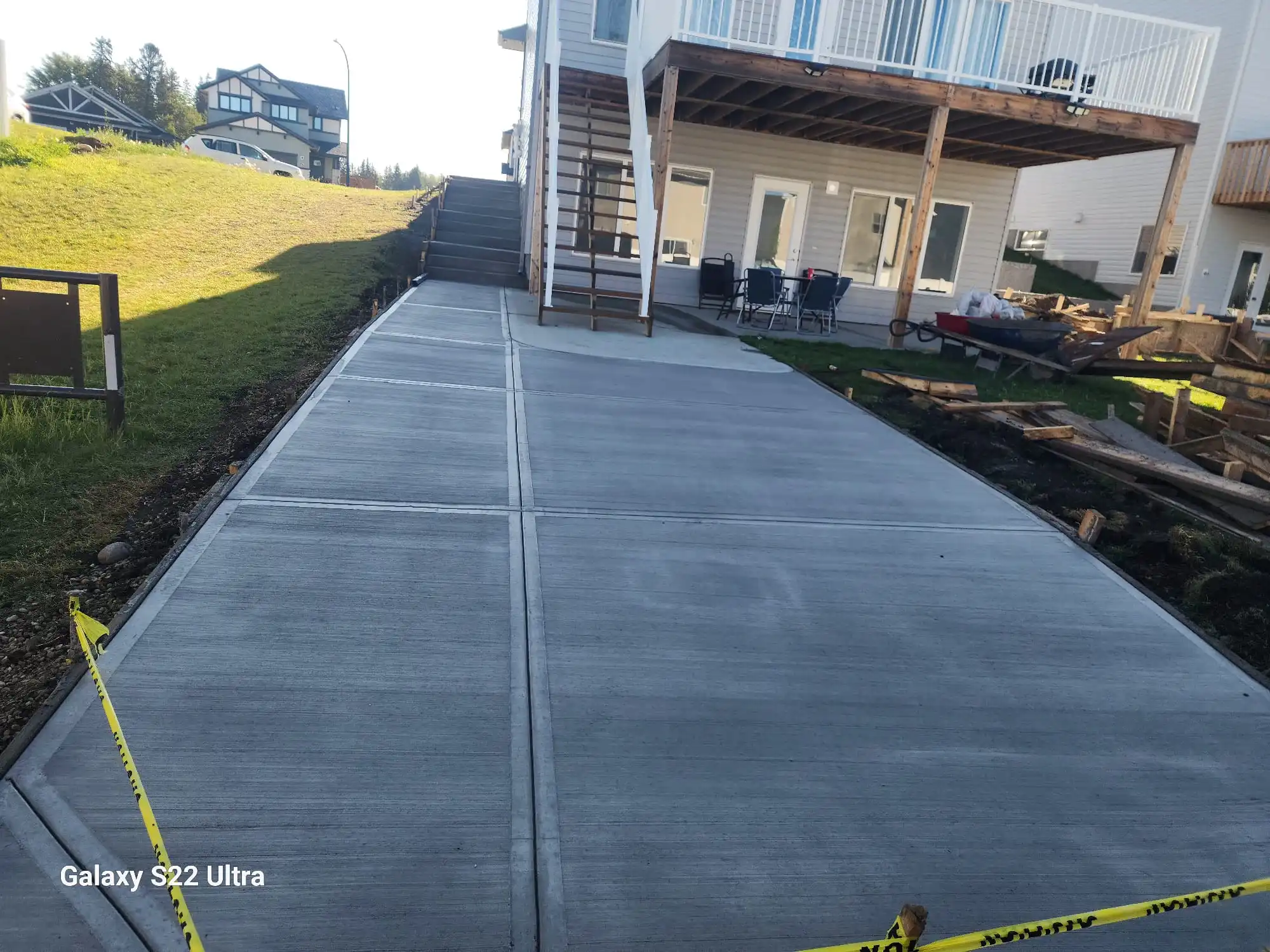
What a Free Gilbert Concrete Driveway Assessment Includes
- Crack mapping: Width, depth, pattern (isolated vs network), and whether cracks follow control joints or cut randomly across the slab
- Spalling depth: Surface delamination vs deep scaling that has compromised aggregate bond
- Base integrity: Sounding the slab for hollow spots indicating voids; checking settlement differential between panels
- Drainage slope: Verifying minimum 1/4 inch per foot drainage grade; identifying ponding areas accelerating deterioration
- Rebar condition: Checking for rust staining or surface ridging above rebar lines indicating chloride penetration
- Slab age and original spec: Older driveways assessed against current 3,500 PSI air-entrained standards to determine remaining service life
You get a written assessment with an honest recommendation — repair or replace — and a written quote for whichever is appropriate. No upselling. If your driveway needs a $500 crack fill, that is what we quote.
Related Concrete Services — Red Deer & Central Alberta
Gilbert Concrete handles the full scope of residential and commercial concrete work across Red Deer, Lacombe, Blackfalds and Sylvan Lake — driveway installation, concrete floor and crack repair, patio installation, foundation services, slab installation, and epoxy floor coating. Visit our homepage to see the full service list.
Frequently Asked Questions — Driveway Repair vs Replacement Red Deer
More From the Gilbert Concrete Blog
How Much Does a Concrete Driveway Cost in Alberta? [2026 Guide]
Full pricing breakdown for concrete driveways across Red Deer and Central Alberta.
Read More →Winter Care Guide for Stamped Concrete Driveways in Red Deer
How to protect stamped concrete driveways through Alberta winters — sealing, snow removal, de-icing.
Read More →How to Choose a Reliable Concrete Contractor in Red Deer
7 questions to ask before hiring — WCB, PSI specs, warranties and red flags.
Read More →Concrete Calculator Alberta 2026 — Slab, Driveway & Garage
Step-by-step formula to calculate cubic yards for any Alberta slab.
Read More →Free Driveway Assessment — Red Deer, Lacombe, Blackfalds
Gilbert Concrete provides free on-site driveway assessments across Red Deer and Central Alberta. Written repair or replacement recommendation and written quote. No upselling. Licensed, WCB insured, 2-year written warranty on all work.