

Winter Care Guide for Stamped Concrete Driveways in Red Deer, Alberta
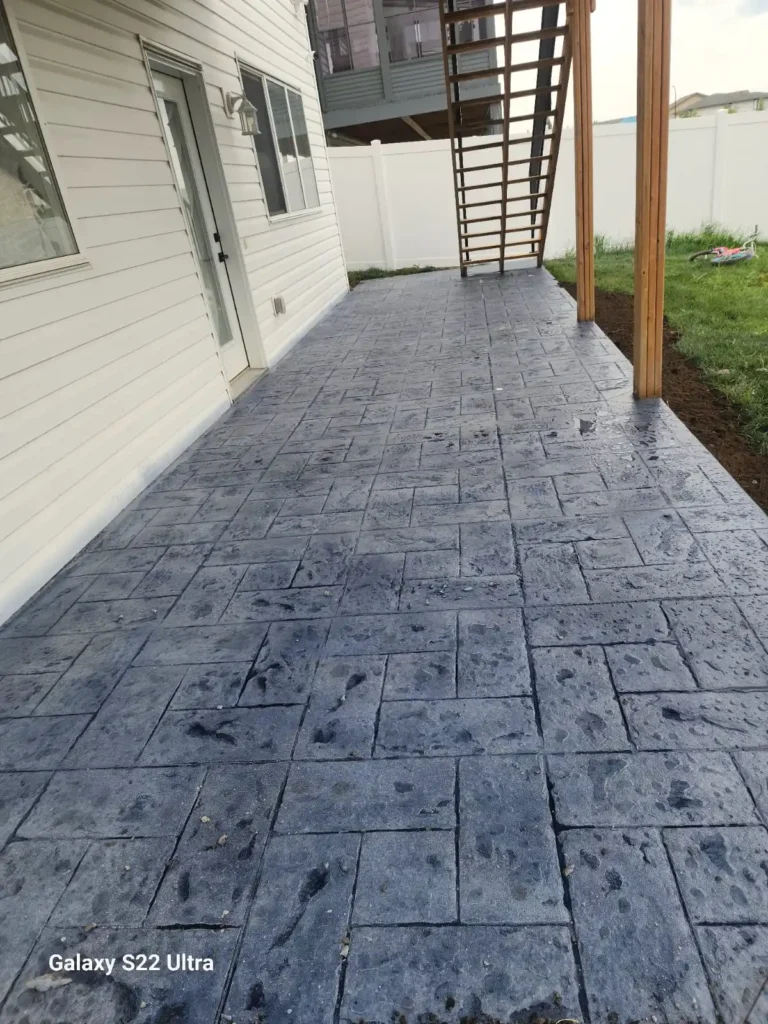
Why Red Deer Winters Demand Serious Driveway Care
Last January, a homeowner in Normandeau called us in a panic. Her beautiful stamped concrete driveway had developed deep cracks overnight. The temperature had dropped from 2°C to -28°C in less than 12 hours. Classic Alberta weather.
Here’s what most Red Deer homeowners don’t realize. That gorgeous stamped driveway you invested $8,000 to $15,000 in faces over 100 freeze-thaw cycles every winter. Each cycle is like a tiny earthquake beneath your concrete surface.
Red Deer sits in Central Alberta’s continental climate zone. We experience some of the most extreme temperature swings in Canada. One day, you’re enjoying a mild Chinook at 10°C. The next morning, you’re scraping ice at -35°C. This isn’t just uncomfortable for you. It’s brutal on your driveway.
AtGilbert Concrete, we’ve repaired hundreds of winter-damaged driveways across Red Deer. From Anders Park to Timberlands, from Bower to Deer Park, the pattern is always the same. Homeowners who skip winter maintenance end up paying three to five times more in repairs.
This guide will save you thousands of dollars. We’ll cover everything from pre-winter sealing to spring recovery. You’ll learn which de-icers destroy concrete and which ones are safe. We’ll show you the exact monthly maintenance schedule we recommend to our own clients.
Let’s protect your investme
Why Stamped Concrete Driveways Need Special Winter Care in Red Deer
The Freeze-Thaw Reality in Central Alberta
Here’s a number that should concern every Red Deer homeowner. Our region experiences between 100 and 120 freeze-thaw cycles annually. That’s not a typo.
A freeze-thaw cycle happens whenever water enters your concrete, freezes, expands, then thaws. Water expands by 9% when it freezes. That might sound small. But multiply that pressure across thousands of tiny pores in your concrete surface. Do that 100 times per winter. Now you understand why cracks appear.
Red Deer’s average winter temperature hovers between -10°C and -20°C. But we regularly see extremes. January 2024 brought temperatures below -40°C. February delivered a Chinook that pushed us to 12°C. That 50-degree swing happened in 48 hours.
Your stamped concrete feels every bit of that temperature whiplash.
Why Stamped Concrete is More Vulnerable Than Plain Concrete
Plain concrete driveways have problems, too. But stamped concrete faces unique challenges that many homeowners overlook.
The textured surface of stamped concrete creates tiny valleys and grooves. These look beautiful. They mimic natural flagstone, slate, or cobblestone patterns. But those grooves trap water. And trapped water becomes trapped ice.
The decorative sealer on stamped concrete also behaves differently in extreme cold. Some sealers become brittle below -20°C. They crack before the concrete does. Once the sealer fails, moisture penetrates directly into the surface.
Color pigments in stamped concrete add another layer of complexity. Salt and chemical de-icers don’t just damage the concrete. They bleach and discolor those expensive integral colors you paid extra for.
We’ve seen driveways in Johnstone Crossing that looked ten years older than their actual age. The culprit was always the same. Improper winter care combined with Alberta’s harsh climate
Red Deer Neighborhoods Most Affected by Winter Damage
Geography matters more than you’d think. Some Red Deer neighborhoods see worse driveway damage than others.
Properties in lower-lying areas like Riverside Meadows experience more moisture accumulation. Water pools on driveways longer before evaporating. More water means more freeze-thaw damage.
Homes in newer subdivisions like Timberlands and Clearview Ridge often have driveways installed on recently disturbed soil. This soil settles unevenly. Combined with frost heave, it creates movement that cracks concrete from below.
Even your driveway’s orientation matters. North-facing driveways in neighborhoods like Bower stay frozen longer. They experience fewer thaw cycles but more prolonged ice accumulation.

Pre-Winter Preparation and Sealing Your Driveway
The September-October Window You Can’t Miss
Timing is everything with concrete sealing. Miss the window and you’re gambling with your driveway’s lifespan.
Most concrete sealers need temperatures above 10°C to cure properly. In Red Deer, that gives you a reliable window from early September through mid-October. After that, overnight temperatures become too unpredictable.
I’ll be honest. Many homeowners call us in November asking for sealing. We have to turn them down. Applying sealer in cold weather doesn’t just waste money. It creates a false sense of protection while actually trapping moisture beneath a poorly cured film.
How to Inspect Your Driveway Before Winter
Before you seal anything, thoroughly inspect your driveway. Here’s the exact checklist we use at Gilbert Concrete.
The Water Bead Test: Splash water on your driveway. If it beads up and sits on the surface, your existing sealer still has life left in it. If water soaks in and darkens the concrete, you need to reseal it.
The Visual Inspection: Walk your entire driveway slowly. Look for hairline cracks, chips in the pattern, areas where the sealer looks worn or chalky, and low spots where water pools.
The Touch Test: Run your hand across the surface. Properly sealed stamped concrete feels slightly slick. If it feels rough or gritty, the sealer has worn through.
Document everything with photos. This helps track deterioration year over year. It also provides evidence if you ever need warranty service.
Choosing the Right Sealer for Alberta Winters
Not all sealers perform equally in extreme cold. We’ve tested dozens of products across Red Deer properties. Here’s what actually works.
Acrylic Sealers: These are the most common for stamped concrete. They enhance color and provide good protection. Look for products rated to -30°C or lower. Budget around $150 to $250 for materials on a typical two-car driveway.
Penetrating Sealers (Silane/Siloxane): These soak into the concrete rather than forming a film on top. They don’t enhance color as much, but they handle freeze-thaw cycles better. They’re especially good for older driveways with existing micro-cracks.
Polyurethane Sealers: The premium option. They offer the best durability and chemical resistance. They cost more, typically $300 to $500 for materials. But they last longer between applications.
For most Red Deer homeowners, we recommend a high-quality acrylic sealer applied every two to three years. Properties with heavy vehicle traffic or north-facing driveways may need annual touch-ups.
DIY Sealing vs. Professional Application
Can you seal your own driveway? Technically, yes. Should you? That depends on your comfort level and attention to detail.
DIY sealing saves money upfront. A homeowner can seal a 500-square-foot driveway for $150 to $250 in materials. Professional sealing for the same area runs $400 to $700.
But here’s what DIY sealers often get wrong. They apply too thick a coat. They seal in humid conditions. They don’t properly clean the surface first. They miss spots in the pattern grooves.
Any of these mistakes reduces sealer effectiveness. Some actually accelerate damage by trapping moisture.
If you choose DIY, follow these rules. Clean the surface thoroughly with a pressure washer set below 2,500 PSI. Let it dry completely for 24 to 48 hours. Apply thin, even coats. Work in sections following the stamped pattern. Never seal if rain is forecast within 24 hours.

Not sure if your driveway needs sealing before winter? Gilbert Concrete offers free fall inspections for Red Deer homeowners. We’ll assess your sealer condition and recommend the right protection.
Snow Removal Best Practices for Stamped Concrete
Tools That Protect Your Investment
The wrong snow removal tool can undo years of careful maintenance in a single afternoon. I’ve seen it happen more times than I can count.
Safe Tools for Stamped Concrete:
- Plastic snow shovels with flat, smooth edges
- Rubber-blade snow pushers
- Soft-bristle push brooms for light snowfall
- Snow blowers with rubber paddles and adjustable height
Tools to Avoid Completely:
- Metal shovels with sharp edges
- Ice scrapers and chippers
- Steel-blade snow plows
- Any tool that scrapes directly on the surface
The stamped pattern on your driveway sits proud of the surface. Metal edges catch on these raised areas. One aggressive scrape can chip the pattern, scratch through the sealer, and expose raw concrete to moisture.
Proper Shoveling Technique
How you shovel matters as much as what you shovel with. Most people shovel against the concrete, scraping and pushing. That’s exactly wrong for stamped surfaces.
Shovel with the pattern, not against it. If your stamped pattern runs in a particular direction, push the snow in that same direction. This reduces the chance of catching an edge.
Lift the snow rather than scraping. Yes, it’s more work. But pushing a shovel blade across stamped concrete under pressure scratches the sealer. Lifting eliminates that friction.
Clear snow before it compacts. Fresh snow removes easily. Snow that’s been driven over or walked on compacts into a dense layer that bonds to the surface. That bonded layer tempts people to scrape harder. Resist that temptation.
Leave a thin layer rather than aggressive scraping. A quarter-inch of snow on your driveway won’t hurt anything. Aggressive scraping to reach bare concrete damages the sealer every time.
Using a Snow Blower Safely
Snow blowers work well on stamped concrete if you adjust them properly. The key setting is blade height.
Set your snow blower’s scraper bar at least one to two inches above the surface. This clearance prevents the metal components from contacting your stamped pattern.
If your snow blower has rubber auger attachments, use them. They’re gentler on decorative surfaces.
Go slowly over textured areas. Quick passes at high speed can cause the machine to bounce and scrape unexpectedly.
Never use a snow blower with metal scraper bars set to ground level. One pass can scratch lines across your entire driveway.

Safe De-Icing Products for Stamped Concrete
De-Icers That Destroy Your Driveway
Here’s something the hardware store won’t tell you. Most de-icing products on their shelves will damage your stamped concrete.
Rock Salt (Sodium Chloride): The most common and the most damaging. Rock salt doesn’t just melt ice. It penetrates the concrete surface and accelerates spalling. It also leaves white residue that stains colored concrete.
Calcium Chloride: Often marketed as “safer” than rock salt. It melts ice at lower temperatures, which sounds good for Alberta. But calcium chloride is hygroscopic. It attracts moisture from the air. That moisture penetrates your concrete and refreezes, causing more damage than the original ice.
Magnesium Chloride: Less damaging than the others, but still problematic for colored stamped concrete. It can cause discoloration over time.
Ammonium Nitrate and Ammonium Sulfate: Sometimes found in fertilizer-based de-icers. These are highly corrosive to concrete. Avoid completely.
According to the Portland Cement Association, chemical de-icers should never be used on concrete less than one year old. For stamped concrete of any age, they recommend extreme caution with any chloride-based product.
Safer Alternatives for Alberta Winters
You need traction on your driveway. Safety matters. But you don’t need chemicals to achieve it.
Sand: The simplest and safest option. Sand provides excellent traction without any chemical reaction. It won’t damage your sealer or discolor your concrete. The only downside is cleanup in spring.
Kitty Litter: Non-clumping, clay-based kitty litter works similarly to sand. It’s readily available and inexpensive. Avoid clumping varieties, which can create a mess when wet.
Calcium Magnesium Acetate (CMA): This is the only chemical de-icer we recommend for stamped concrete. CMA is biodegradable and concrete-safe. It costs more than rock salt, typically $20 to $30 for a 50-pound bag versus $8 to $10 for rock salt. But it won’t destroy your driveway.
Coffee Grounds: A surprisingly effective traction aid. The dark color absorbs sunlight and helps melt ice naturally. It’s also free if you’re a coffee drinker.
Alfalfa Meal: Available at garden centers. It provides traction and contains nitrogen that helps break down ice. It’s completely safe for concrete and plants.
The Hidden Danger Most Homeowners Miss
Your neighbor’s driveway might be damaging yours. Seriously.
When your neighbor applies rock salt, that salt dissolves into water. Water flows downhill. If your driveway sits lower than adjacent properties, you’re receiving salt-contaminated runoff.
Road salt is another major culprit. Every time a City of Red Deer salt truck passes your house, some of that salt splashes onto your driveway. Vehicles driving through salted roads track more salt onto your property.
What can you do? Rinse your driveway periodically during winter thaws. A quick spray with a garden hose washes away salt residue before it penetrates the surface. This simple step makes a significant difference over the course of a winter.

Protecting Your Concrete Sealer During Winter
How Winter Weather Attacks Your Sealer
The sealer on your stamped concrete is your first line of defense. It’s also the first thing winter destroys.
UV radiation remains strong in winter, especially when reflecting off snow. This UV exposure breaks down acrylic sealers over time, causing them to become chalky and weak.
Chemical de-icers, whether from your own application or runoff from roads and neighbors, dissolve certain sealer types. The sealer literally disintegrates, leaving the concrete exposed.
Physical abrasion from snow shoveling, foot traffic, and vehicle tires wears through the sealer in high-traffic areas. The driveway entrance and the area where you typically park see the most wear.
Warning Signs Your Sealer is Failing
Check your driveway monthly throughout winter. Early detection prevents expensive repairs.
Water No Longer Beads: The most reliable test. Pour a cup of water on your driveway. If it soaks in instead of beading up, your sealer has failed in that area.
Dull or Faded Appearance: A healthy sealer gives stamped concrete a slight sheen and enhances color depth. The failing sealer looks flat and washed out.
White Haze or Cloudiness: This indicates moisture trapped beneath the sealer. It’s often caused by applying sealer in cold or humid conditions or by moisture penetrating through worn areas.
Visible Wear Patterns: Look for areas that appear different from the surrounding concrete. Traffic lanes, entry points, and parking spots often show wear first
Emergency Sealer Protection in Winter
What if you notice sealer failure in January? You can’t apply the new sealer until spring. But you can take protective measures.
Avoid chemical de-icers completely on damaged areas. The exposed concrete is extremely vulnerable. Use sand only for traction.
Keep the area as dry as possible. Clear snow promptly. Sweep away standing water during thaws.
Consider applying a temporary penetrating water repellent. Some products work in temperatures as low as -5°C. They won’t restore the full sealer protection, but they reduce moisture penetration until you can properly reseal in spring.
Document the damage with photos and measurements. This helps plan your spring repair strategy and provides a baseline for tracking improvement.
our Sealer Still Protecting Your Driveway? → Free Sealer Assessment from Gilbert Concrete | Red Deer’s Stamped Concrete Experts
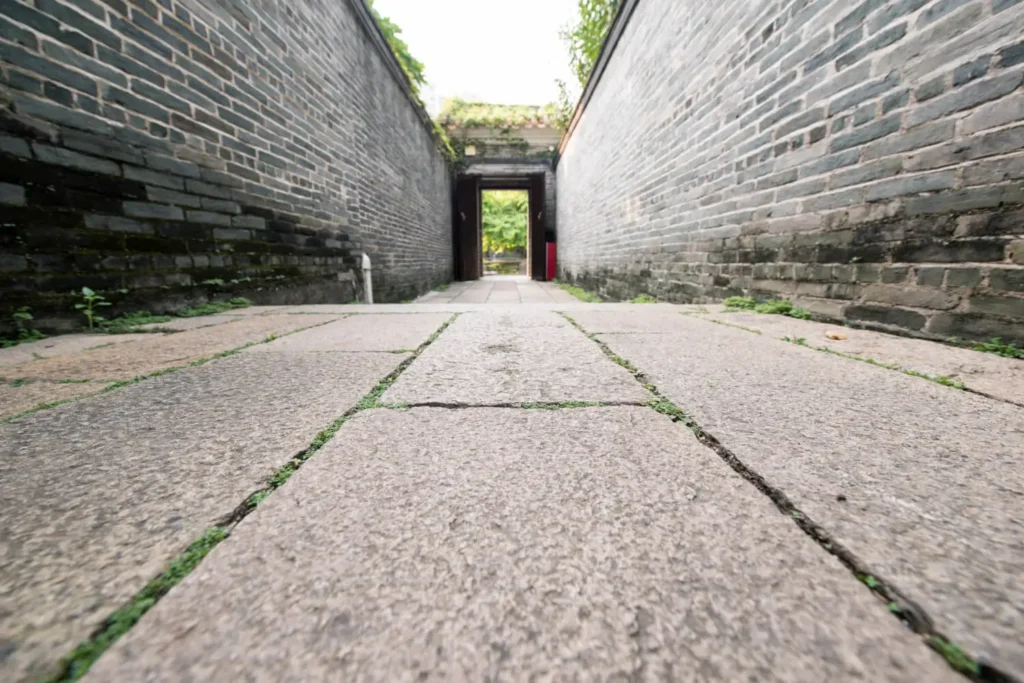
Common Winter Damage on Stamped Concrete
Surface Spalling and Flaking
Spalling looks like your concrete has developed acne. Small pits and flakes appear across the surface. Sometimes chunks of concrete pop off entirely.
The cause is almost always moisture penetration followed by freezing. Water gets into the concrete, freezes, expands, and breaks off surface material.
Spalling often appears after using rock salt or calcium chloride de-icers. The chemicals accelerate the damage by drawing more moisture into the concrete.
Minor spalling is cosmetic. You can continue using your driveway normally. Repair in spring with a concrete resurfacing product color-matched to your stamped pattern.
Severe spalling indicates deeper problems. If you see spalling over large areas or if chunks larger than a quarter are coming off, the damage may extend into the concrete itself. This requires professional assessment.
Crack Formation and Expansion
All concrete cracks eventually. Control joints help direct where cracks form. But winter temperatures accelerate crack development and make existing cracks worse.
Water enters hairline cracks, freezes, and expands the crack slightly. The next freeze-thaw cycle repeats the process. A hairline crack in October becomes a visible crack by March.
Not all cracks indicate structural failure. Hairline cracks under 1/8 inch wide are usually cosmetic. They can be filled with a color-matched crack filler in spring.
Cracks wider than 1/4 inch, cracks that continue growing, or cracks accompanied by concrete heaving suggest structural issues. These may indicate problems with the base material, drainage, or frost heave. Professional evaluation is recommended.
According to Natural Resources Canada, frost penetration in Central Alberta reaches depths of 1.5 to 2 meters in severe winters. This deep freezing affects soil beneath concrete, causing movement that cracks even well-installed driveways.
Salt Staining and Discoloration
White stains on colored stamped concrete are heartbreaking. That expensive terracotta or slate gray pattern suddenly looks bleached and patchy.
Two types of staining occur. Salt residue sits on the surface and can often be cleaned off. Efflorescence rises from within the concrete itself and is harder to remove.
Surface salt stains respond to pressure washing in the spring. Use a fan tip at moderate pressure, around 2,000 to 2,500 PSI. Work systematically across the surface.
Efflorescence appears as white crystalline deposits. It’s caused by water carrying mineral salts from inside the concrete to the surface. It indicates moisture movement through your concrete, which suggests sealer failure.
Mild efflorescence can be scrubbed with a mixture of white vinegar and water. Severe efflorescence may require commercial efflorescence remover and professional color restoration.

Monthly Winter Maintenance Schedule for Red Deer Homeowners
November: Early Winter Preparation
The first serious cold usually arrives in Red Deer during November. This month is your last chance to prepare.
Week 1-2: Final Sealer Check
Perform the water bead test across your entire driveway. If water soaks in anywhere, note those areas. They’ll need extra attention all winter and first priority for spring resealing.
Take photos of your driveway’s current condition. Include close-ups of any existing cracks or worn areas. This documentation helps track changes through winter.
Week 3-4: Stock Supplies and Prepare Tools
Purchase your winter supplies. We recommend 100 pounds of sand and 25 pounds of CMA for a typical two-car driveway. This should last the season.
Inspect your snow removal tool
December: Active Winter Care Begins
December brings consistent cold and regular snowfall. Your maintenance routine becomes active.
After Every Snowfall:
Remove snow within 24 hours when possible. Fresh snow is easy to remove. Compacted snow bonds to the surface and tempts aggressive scraping.
Apply sand or CMA sparingly to icy areas. A thin application provides traction. Heavy application wastes product and creates spring cleanup problems.
Weekly Tasks:
Inspect for ice dam formation where your driveway meets the garage. These areas collect runoff and freeze into thick ice layers.
Check tire parking spots for signs of fluid leaks. Oil, antifreeze, and transmission fluid all damage concrete sealers. Address any vehicle leaks promptly.
January: Peak Cold Management
January is typically Red Deer’s coldest month. Focus shifts from active melting to maintaining traction safely.
Temperature Reality Check:
When temperatures stay below -20°C, de-icers become less effective anyway. Calcium magnesium acetate stops working around -25°C. Rock salt stops working around -15°C (not that you should use it regardless).
Sand becomes your primary traction tool in extreme cold. It works regardless of temperature and causes no damage.
Mid-Winter Inspection:
Walk your driveway during a sunny afternoon. Look for new cracks that have appeared since November. Document any new damage.
Pay attention to areas where you park vehicles. Repeated parking in the same spot concentrates wear in that area. Consider alternating parking positions if possible.
February and March: Late Winter Vigilance
These months bring the most freeze-thaw cycles. Daytime temperatures rise above freezing more frequently. Nighttime refreezing happens almost daily.
Increased Monitoring:
Expect to see the most new damage during this period. Check your driveway weekly for changes.
Clear the snow more promptly. Snow that melts during the day and refreezes at night creates ice layers that bond tightly to concrete.
Planning Ahead:
Schedule your spring professional inspection now.Concrete driveway experts in Red Deer book quickly once temperatures rise. Early scheduling ensures prompt service.
Make a list of all damage observed during winter. Note crack locations and sizes, stained areas, sealer wear patterns, and any structural concerns.

Winter Maintenance Costs for Stamped Concrete Driveways in Red Deer
DIY Maintenance Cost Breakdown
Maintaining your own driveway keeps costs manageable if you’re willing to invest the time.
One-Time Equipment Costs:
- Quality plastic snow shovel: $25 to $45
- Rubber-blade snow pusher: $40 to $70
- Soft-bristle push broom: $20 to $35
- Total equipment investment: $85 to $150
Annual Supply Costs:
- Sand (200 lbs for season): $15 to $25
- Calcium magnesium acetate (50 lbs): $40 to $60
- Crack filler kit: $25 to $40
- Total annual supplies: $80 to $125
DIY Sealer Application (every 2-3 years):
- Concrete sealer (5 gallons): $100 to $200
- Applicator tools: $30 to $50
- Concrete cleaner: $20 to $30
- Total DIY sealing: $150 to $280
Estimated Annual DIY Cost: $150 to $300
This assumes you’re not paying yourself for labor. Plan for 10 to 15 hours of driveway maintenance over the winter season, including snow removal time.
Professional Maintenance Service Costs
Professional maintenance costs more upfront but ensures expert application and saves your time.
Professional Sealing Service (every 2-3 years):
Red Deer contractors typically charge $0.80 to $1.50 per square foot for stamped concrete sealing. For a 500-square-foot driveway, expect $400 to $750.
This includes surface preparation, cleaning, and professional-grade sealer application. Many contractors offer better warranties on their work than you’d get from DIY application.
Professional Crack Repair:
Minor crack filling: $150 to $300 Moderate crack repair with color matching: $300 to $600 Extensive crack repair: $600 to $1,200
Professional Winter Inspection:
Some concrete contractors offer fall inspection services. Expect $75 to $150 for a thorough assessment with written recommendations.
Estimated Annual Professional Cost: $500 to $1,500
This assumes professional sealing every three years (annualized cost $130 to $250) plus inspection and minor repairs as needed.
The True Cost of Neglecting Winter Maintenance
Skipping maintenance seems cheaper. The math says otherwise.
Repair Costs for Neglected Driveways:
- Minor spalling repair: $500 to $1,200
- Extensive spalling with resurfacing: $1,500 to $4,000
- Major crack repair with color restoration: $800 to $2,500
- Partial driveway replacement: $2,000 to $5,000
- Complete driveway replacement: $8 to $15 per square foot
For a 500-square-foot stamped concrete driveway, replacement costs $4,000 to $7,500. That’s 15 to 30 years of proper maintenance costs.
The Bottom Line:
A properly maintained stamped concrete driveway lasts 25 to 30 years. A neglected driveway in Alberta’s climate may need major repairs or replacement in 10 to 15 years.
Investing $300 to $500 annually in maintenance protects an asset worth $8,000 to $15,000. That’s a return on investment most financial advisors would envy.

Hiring Professional Winter Maintenance in Red Deer
When to Call a Concrete Professional
Some situations require professional expertise. Attempting DIY repairs on serious damage often makes things worse.
Call a Professional When You Notice:
Deep cracks wider than 1/4 inch are appearing or growing rapidly. These may indicate structural issues requiring assessment beyond simple filling.
Significant spalling covering more than 10% of your driveway surface. Extensive spalling suggests either severe freeze-thaw damage or a problem with the original concrete mix.
Concrete heaving or sections that have shifted. This indicates base material problems that won’t be fixed by surface repairs.
Complete sealer failure across large areas. A professional application ensures proper preparation and even coverage.
Color restoration needs. Matching stamped concrete colors requires experience and specialized products.
What to Look for in a Red Deer Concrete Contractor
Not all concrete contractors specialize in stamped concrete. Decorative concrete requires different skills than standard flatwork.
Essential Qualifications:
Specific experience with stamped concrete repair and maintenance. Ask to see examples of previous stamped concrete projects. Request references from homeowners with similar driveways.
Knowledge of sealers appropriate for Alberta’s climate. The contractor should explain their product choices and why those products work in our freeze-thaw conditions.
Understanding of color matching for stamped patterns. If repairs are needed, the contractor should demonstrate the ability to match existing colors.
Proper licensing and insurance. Alberta requires concrete contractors to carry appropriate liability coverage. Ask for proof of insurance before work begins.
Warranty offerings on their work. Reputable contractors stand behind their sealing and repair work. Ask about warranty terms and what they cover.

Questions to Ask Before Hiring
About Products and Methods:
“What sealer do you recommend for our Alberta winters, and why?”
Look for specific product names and explanations of how they handle freeze-thaw cycles.
“How do you prepare the surface before sealing?”
Proper preparation matters as much as the sealer itself. They should describe cleaning, etching if needed, and drying requirements.
About Experience:
“How many stamped concrete driveways have you sealed or repaired in Red Deer?”
Local experience matters. Someone who has worked on properties in your area understands regional conditions.
“Can you provide references from stamped concrete customers?”
Specifically stamped concrete, not just general concrete work.
About Logistics:
“What weather conditions do you require for sealing?”
The answer should mention temperature minimums and rain-free windows.
“What is your warranty, and what does it cover?”
Get warranty terms in writing before work begins.

Frequently Asked Questions: Stamped Concrete Winter Care in Alberta
Traditional rock salt damages stamped concrete significantly. The sodium chloride penetrates the sealer, accelerates freeze-thaw damage, and discolors integral coloring. If you must use a chemical de-icer, calcium magnesium acetate (CMA) is the only option we recommend. It costs more but won’t destroy your driveway. For regular traction needs, plain sand works safely and effectively.
Plan for resealing every two to three years in Red Deer’s climate. Our severe freeze-thaw cycles and UV exposure wear sealers faster than milder regions. High-traffic driveways or those with north-facing exposure may need attention every 18 to 24 months. Perform the water bead test each September. If water soaks in instead of beading, it’s time to reseal, regardless of the calendar.
Most concrete sealers require air and surface temperatures above 10°C (50°F) for proper curing. Additionally, nighttime temperatures should stay above 4°C (40°F) for at least 24 hours after application. In Red Deer, this typically limits sealing to early September through mid-October. Some specialized sealers work in slightly cooler conditions, but results are less reliable. Never seal when frost is expected within 24 hours.
Snow blowers are safe for stamped concrete when used correctly. The critical adjustment is blade height. Set the scraper bar at least one to two inches above the surface. This prevents metal components from contacting your stamped pattern. Use rubber auger attachments if available. Go slowly over textured areas to prevent bouncing and unexpected surface contact.
Patience protects your driveway. Avoid chipping or scraping ice with metal tools. Apply sand or CMA for traction rather than trying to remove ice completely. On sunny days, let solar heat do the work. If ice buildup becomes severe, carefully pour lukewarm (not hot) water to loosen it. Hot water can cause thermal shock that cracks concrete.
Yes. Freeze-thaw cycles cause cracking in all concrete, and Alberta’s 100+ annual cycles accelerate this process. Proper sealing significantly reduces cracking by preventing moisture penetration. Control joints installed during original construction help direct where cracks form. Small hairline cracks are normal and repairable. Larger cracks or those that grow quickly may indicate drainage or base problems requiring professional assessment.
Road salt from passing vehicles and city trucks is a hidden threat. Consider adding a gravel buffer strip between the road edge and your driveway. Rinse your driveway during winter thaws to wash away salt residue before it penetrates the surface. Apply extra sealer attention to the street-facing edge of your driveway. Plan a thorough power washing each spring to remove accumulated salt residue.
Once temperatures consistently drop below 10°C, wait until spring. Applying sealer in cold weather wastes money and creates false protection while trapping moisture beneath an improperly cured film. Focus instead on proper snow removal and avoiding chemical de-icers. Document any damage that appears for spring repair planning. Schedule your spring sealing appointment early, as contractors book quickly once temperatures rise.
Spring Recovery: Preparing Your Driveway for Next Winter
Post-Winter Inspection Checklist

Spring Recovery: Preparing Your Driveway for Next Winter
Post-Winter Inspection Checklist
March and April reveal the true toll of winter. Once snow melts completely and temperatures stabilize above freezing, conduct a thorough inspection.
Visual Assessment:
Walk your entire driveway slowly. Look for new cracks that appeared over winter. Measure and photograph any cracks wider than a pencil line.
Check for spalling or flaking areas. Note the size and location of any surface damage.
Examine the sealer condition across the entire surface. Perform the water bead test in multiple locations.
Functional Assessment:
Check drainage patterns. Does water flow away from the driveway properly, or does it pool in areas?
Look for signs of base settlement. Are any sections lower than adjacent areas?
Examine the driveway edges. Erosion alongside the driveway can undermine the concrete.
Spring Cleaning Best Practices
Proper cleaning prepares your driveway for sealing and removes winter contaminants.
Pressure Washing Guidelines:
Use a fan tip, not a pinpoint tip. Pinpoint tips can damage stamped surfaces.
Keep pressure under 3,000 PSI. Higher pressure risks damaging the pattern texture.
Maintain a consistent distance from the surface. Varying distance creates uneven cleaning.
Work systematically in sections. Overlap your passes to avoid missed spots.
Allow complete drying before any sealer application. This typically requires 24 to 48 hours of dry weather.
Treating Salt Stains:
For surface salt residue, pressure washing usually suffices.
For stubborn white stains, apply a mixture of one part white vinegar to three parts water. Scrub gently and rinse thoroughly.
For severe efflorescence, a commercial efflorescence remover may be necessary. Follow product instructions carefully.
Scheduling Professional Maintenance
Spring demand for concrete services peaks quickly. Early scheduling ensures prompt service.
Contact contractors in late March or early April for spring appointments. Explain your needs based on your winter documentation.
Typical spring services include inspection, cleaning, crack repair, color restoration, and sealing. Not every driveway needs all services every year.
If your inspection revealed significant damage, get multiple quotes. Compare not just prices but also product specifications, preparation methods, and warranty terms.
AtGilbert Concrete, we recommend annual professional inspections even for homeowners who handle basic maintenance themselves. A trained eye catches problems you might miss.
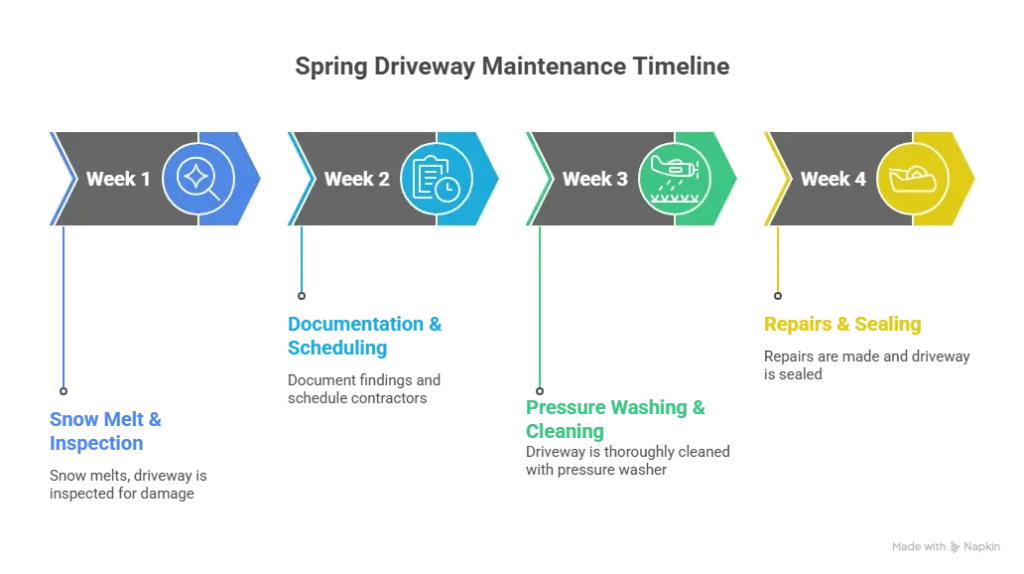
Ready to Protect Your Driveway Before Next Winter? Gilbert Concrete provides expert stamped concrete maintenance, sealing, and repair throughout Red Deer and Central Alberta.
Protecting Your Red Deer Investment
Your stamped concrete driveway represents a significant investment. In Red Deer’s challenging climate, that investment requires active protection.
The difference between a driveway that lasts 10 years and one that lasts 25 years comes down to consistent maintenance. Pre-winter sealing, safe snow removal, avoiding chemical de-icers, and prompt attention to damage keep your driveway looking beautiful through decades of Alberta winters.
Here’s your action plan. This fall, schedule a sealer inspection. Stock up on sand and CMA before November. Train everyone in your household on proper snow removal techniques. Monitor your driveway monthly throughout winter. Document any changes. Schedule spring cleaning and repairs promptly.
Those simple steps protect an $8,000 to $15,000 asset for decades.
One final thought. Every homeowner we’ve helped recover from severe winter damage says the same thing. They wish they had started proper maintenance earlier. Don’t wait until damage forces your hand. Start this season with good habits that will save you thousands over the life of your driveway.
Your beautiful stamped concrete deserves that care. So does your wallet.
Get Expert Help From Red Deer’s Stamped Concrete Specialists
Gilbert Concrete has helped hundreds of Red Deer homeowners protect and maintain their stamped concrete driveways. Our services include:
- Free Driveway Inspections — We assess your sealer condition, identify damage, and recommend solutions
- Professional Sealing — Climate-appropriate sealers applied by experienced technicians
- Crack Repair & Color Restoration — Seamless repairs that match your existing pattern
- Concrete Driveway Installation — New stamped driveways built for Alberta’s climate
- Maintenance Plans — Annual programs that protect your investment year after year
Serving all Red Deer neighborhoods:
Anders Park, Bower, Clearview Ridge, Deer Park, Eastview, Johnstone Crossing, Lancaster, Normandeau, Parkvale, Riverside Meadows, Sunnybrook, Timberlands, and surrounding Central Alberta communities including Blackfalds, Lacombe, Penhold, and Sylvan Lake.